
Instructional Assistance: A Comprehensive Guide
Instructional assistance is a dynamic process, offering temporary support to learners, enabling them to achieve mastery of tasks beyond their current capabilities.
This approach, rooted in adaptive support, fosters growth and independent learning, mirroring how builders use scaffolding during construction.
It’s about strategically providing tools and structures to bridge the gap between a student’s existing knowledge and the desired learning outcome.
What is Instructional Assistance?
Instructional assistance, at its core, represents a deliberate and adaptive approach to teaching and learning. It’s fundamentally about providing temporary support structures – or “scaffolds” – to students who are striving to grasp new concepts or master challenging skills. This isn’t simply giving answers, but rather guiding students through a process of discovery and understanding.
The goal is to empower learners to accomplish tasks they couldn’t tackle independently. This support is tailored to individual needs, recognizing that each student enters the classroom with varying levels of prior knowledge and readiness. Effective instructional assistance breaks down complex tasks into manageable chunks, offering tools and strategies along the way.
As students gain competence, the scaffolding is gradually removed, fostering self-reliance and a deeper, more lasting understanding. It’s a process of building capacity, not creating dependence, ultimately leading to independent mastery of the subject matter. This methodology is crucial for equitable learning environments.
The Core Concept of Scaffolding
Scaffolding, the central tenet of instructional assistance, draws a powerful analogy from the construction world. Just as temporary scaffolding supports builders, educational scaffolding provides temporary support to learners. This support isn’t a one-size-fits-all solution; it’s adaptive and responsive to each student’s unique needs and progress.
The essence of scaffolding lies in breaking down complex learning into smaller, more manageable steps. Each step is accompanied by targeted support – be it modeling, prompting, or providing relevant resources. As the learner gains proficiency, the support is systematically reduced, allowing for increasing independence.
Crucially, effective scaffolding isn’t about simplifying the task itself, but about providing the necessary tools and guidance to enable students to tackle challenging material successfully. It’s a temporary bridge to competence, fostering self-regulation and a deeper understanding of the learning process.
Historical Roots and Cultural Influences of Scaffolding
While the term “scaffolding” in education gained prominence with Wood, Bruner, and Ross’s work in the 1970s, the underlying principles have deeper historical roots; Lev Vygotsky’s Zone of Proximal Development (ZPD) – the gap between what a learner can do independently and what they can achieve with guidance – provided the theoretical foundation.
Interestingly, the practice of supportive teaching isn’t new. Observations suggest parallels with traditional pedagogical approaches in various cultures, particularly in some Asian parenting styles where actively assisting children beyond their current abilities is common. This pushes learners to expand their comfort zones.
However, modern scaffolding, as a formalized instructional strategy, emphasizes a systematic and temporary nature of support, differing from continuous assistance. It acknowledges the importance of fading support to promote independent learning and self-efficacy.

Key Strategies in Instructional Assistance
Effective strategies include modeling, activating prior knowledge, utilizing visual aids, and encouraging collaborative learning, all designed to provide targeted support and enhance comprehension.
Modeling and Demonstration
Modeling, a cornerstone of instructional assistance, involves teachers explicitly demonstrating the desired skill or process. This “think-aloud” approach reveals the cognitive strategies employed, making the learning process transparent for students.
By observing a proficient model, students gain a clear understanding of expectations and can internalize effective techniques. Demonstration isn’t simply showing – it’s a carefully orchestrated performance that highlights critical steps and potential challenges.
This strategy is particularly beneficial when introducing complex tasks or concepts. Following the demonstration, guided practice allows students to apply the modeled skills with support, gradually increasing their independence. It’s about showing how to think, not just what to think, fostering deeper understanding and skill acquisition.

Activating Prior Knowledge
Activating prior knowledge is a crucial instructional assistance strategy, bridging the gap between what students already know and new information. This process enhances comprehension and retention by providing a framework for integrating new concepts.
Teachers can employ various techniques, such as brainstorming, KWL charts (Know, Want to Know, Learned), or quick writes, to elicit existing understanding. Connecting new material to students’ experiences makes learning more relevant and meaningful.
This isn’t simply recalling facts; it’s about prompting students to reflect on their existing schemas and how new information might fit within them. By building upon established knowledge, educators foster deeper learning and reduce cognitive overload, creating a stronger foundation for future understanding.
Utilizing Visual Aids
Utilizing visual aids is a powerful instructional assistance technique, catering to diverse learning styles and enhancing comprehension. These aids can range from simple diagrams and charts to complex illustrations, videos, and interactive simulations.
Visuals break down complex information into more manageable chunks, making it easier for students to process and retain. They support understanding for visual learners and provide a concrete representation of abstract concepts.
Effective visual aids aren’t merely decorative; they directly support the learning objective. They should be clear, concise, and appropriately labeled. Incorporating visuals alongside verbal explanations creates a multi-sensory learning experience, boosting engagement and improving overall learning outcomes.
Encouraging Collaborative Learning
Encouraging collaborative learning serves as a vital form of instructional assistance, fostering a supportive environment where students learn from and with each other. This approach moves beyond individual work, promoting active participation and shared responsibility for understanding.
Through group discussions, peer tutoring, and joint problem-solving, students articulate their thinking, challenge assumptions, and build upon each other’s ideas. This process not only deepens comprehension but also develops crucial social and communication skills.
Effective collaborative activities require clear guidelines and roles to ensure equitable participation. The teacher acts as a facilitator, guiding the process and providing support as needed, ultimately empowering students to become self-directed learners.

Elements of Effective Scaffolded Instruction
Effective scaffolding includes a clear goal, a whole-task approach, immediate help availability, and fostering self-regulation – all crucial for student success and independence.
Defining a Clear and Specific Learning Goal
Establishing a well-defined learning goal is the cornerstone of effective instructional scaffolding. Students require a precise understanding of what they are expected to learn and why it matters.
This clarity provides direction and motivation, allowing learners to focus their efforts. A vague objective, such as “understand fractions,” is far less helpful than a specific goal like, “students will be able to add fractions with unlike denominators.”
Sharing this goal upfront allows teachers to tailor scaffolding strategies to directly address the specific challenges students might encounter. It also enables students to self-assess their progress and understand when they’ve achieved mastery. Without a clear target, scaffolding lacks purpose and can become ineffective, hindering genuine learning and student growth.
Employing a Whole-Task Approach
A whole-task approach in instructional assistance presents students with the complete task from the outset, rather than breaking it down into isolated skills. While seemingly counterintuitive, this fosters a sense of purpose and relevance.
Scaffolding is then layered onto this whole task, providing support as needed. This contrasts with approaches that focus on decontextualized skill practice. For example, instead of practicing individual grammar rules, students might edit a complete piece of writing.
This method allows students to see the practical application of their learning and understand how different skills integrate. The teacher then strategically provides support – modeling, prompting, or providing resources – to help students navigate the complexities of the entire task, gradually fading assistance as competence grows.
Providing Immediate and Accessible Help
Immediate and accessible help is a cornerstone of effective instructional assistance. Students require support when they need it, not after struggling for extended periods. This means teachers must be readily available to offer guidance, clarification, or resources.
Accessibility extends beyond physical presence; help should be presented in a way that’s easily understood. This could involve rephrasing instructions, offering visual cues, or providing worked examples. The intention is to remove roadblocks to learning, not simply provide answers.
Crucially, this support should be temporary and targeted. The goal isn’t to do the work for the student, but to empower them to overcome challenges independently, fostering self-regulation and deeper understanding.
Fostering Student Self-Regulation
Fostering student self-regulation is a paramount goal of instructional assistance. Effective scaffolding doesn’t create dependence; it cultivates independence. This involves equipping students with the skills to monitor their own learning, identify areas of difficulty, and proactively seek solutions.

Teachers can promote self-regulation by encouraging students to set personal learning goals, reflect on their progress, and utilize strategies like self-questioning. Providing checklists, rubrics, and opportunities for peer feedback also empowers students to take ownership of their learning journey.
Ultimately, the aim is to gradually withdraw support as students develop these skills, enabling them to become confident, self-directed learners capable of tackling challenges independently.

Tools and Techniques for Instructional Assistance
Effective tools include technology, graphic organizers, and strategic questioning. Differentiated instruction provides tailored support, while techniques break learning into manageable chunks, aiding comprehension.
Technology-Based Scaffolding Tools

Technology offers a wealth of resources for instructional scaffolding. Interactive simulations and virtual labs provide safe environments for experimentation and skill practice, allowing students to explore concepts without real-world consequences.
Educational software often incorporates built-in supports like hints, step-by-step tutorials, and immediate feedback, catering to individual learning paces. Online platforms facilitate collaborative projects, fostering peer scaffolding and knowledge sharing.
Adaptive learning systems dynamically adjust the difficulty level based on student performance, providing personalized challenges and targeted assistance. Digital graphic organizers and mind-mapping tools aid in visualizing complex information and structuring thoughts. Furthermore, readily available online dictionaries and translation tools support English Language Learners, removing linguistic barriers to comprehension.
Graphic Organizers and Visual Representations
Graphic organizers are powerful scaffolding tools, transforming abstract concepts into accessible visual formats. Tools like Venn diagrams, concept maps, and flowcharts help students structure their thinking, identify relationships, and organize information effectively.
Visual representations, such as timelines and charts, provide a clear overview of complex processes or historical events, aiding comprehension and retention. These aids are particularly beneficial for visual learners, offering alternative pathways to understanding.
By breaking down information into manageable chunks and highlighting key connections, graphic organizers and visuals reduce cognitive load and promote deeper learning. They also encourage students to actively participate in the learning process, fostering critical thinking and problem-solving skills. Utilizing these tools supports breaking learning into chunks.
Questioning Techniques to Promote Thinking
Strategic questioning is a cornerstone of effective instructional assistance, moving beyond simple recall to stimulate higher-order thinking. Employing open-ended questions – those requiring more than a “yes” or “no” answer – encourages students to elaborate, justify their reasoning, and explore different perspectives.
Socratic questioning, a method of probing questions, guides students to construct meaning independently, revealing underlying assumptions and challenging their existing knowledge. Probing questions like “What if…?” or “How does this relate to…?” deepen understanding and foster critical analysis.
Thoughtful questioning also provides valuable formative assessment data, allowing teachers to gauge student comprehension and adjust instruction accordingly. It’s about creating a dialogue, not just delivering information, and supporting students as they navigate complex ideas.
Differentiated Instruction as a Scaffolding Method
Differentiated instruction inherently functions as a powerful scaffolding method, recognizing that learners possess varying levels of readiness and learning preferences. It involves tailoring instruction – content, process, product, or learning environment – to meet individual student needs, providing appropriate levels of support.
This might involve offering tiered assignments, where tasks vary in complexity, or providing different levels of prompting and guidance. For some students, this could mean more explicit modeling or simplified materials, while others might benefit from extension activities and independent exploration.
By adjusting the level of challenge and support, differentiated instruction ensures all students can access the curriculum and experience success, gradually removing scaffolds as they gain competence. It’s about creating equitable access to learning, not simply providing the same instruction to everyone.

Adapting Instructional Assistance to Diverse Learners
Effective instructional assistance requires flexibility, acknowledging varied learning needs. Tailoring support for students with disabilities, English language learners, and gifted learners is crucial for success.
Supporting Students with Learning Disabilities
Instructional assistance for students with learning disabilities necessitates a highly individualized approach. Scaffolding should focus on breaking down complex tasks into smaller, manageable steps, providing explicit instruction and frequent opportunities for practice.
Utilizing multi-sensory techniques – incorporating visual, auditory, and kinesthetic elements – can significantly enhance comprehension and retention. Providing assistive technology, such as text-to-speech software or graphic organizers, can also level the playing field.
Furthermore, offering extended time for assignments and assessments, reducing distractions, and providing clear, concise instructions are vital components of effective support. Regularly monitoring student progress and adjusting scaffolding strategies based on individual needs is paramount to fostering a sense of accomplishment and promoting academic growth. Remember, the goal is to empower these learners to become independent and successful.
Addressing the Needs of English Language Learners
Instructional assistance for English Language Learners (ELLs) requires a sensitive and strategic approach to scaffolding. Prioritizing pre-teaching key vocabulary and concepts is crucial, alongside providing visual aids and real-world connections to make content accessible.
Employing simplified language, repeating instructions, and allowing ample wait time for processing are essential. Encouraging collaborative learning opportunities, where ELLs can learn from peers, fosters language development and confidence.
Scaffolding should also include explicit instruction in language structures and providing opportunities for students to practice using new language in meaningful contexts. Culturally responsive teaching practices, acknowledging and valuing students’ backgrounds, are vital; Regularly assessing language proficiency and adjusting support accordingly ensures equitable access to learning.
Strategies for Gifted and Talented Students
Instructional assistance for gifted and talented students often involves expanding rather than simplifying the curriculum. Scaffolding should focus on providing opportunities for advanced exploration, critical thinking, and creative problem-solving.
Employing strategies like compacting – allowing students to demonstrate mastery of concepts quickly and move on to more challenging material – is beneficial. Encourage independent research projects, mentorships with experts, and participation in advanced coursework.
Scaffolding can also involve providing open-ended tasks with multiple solutions, fostering self-directed learning, and encouraging students to mentor their peers. Focus on depth and complexity, allowing them to delve deeper into topics that ignite their passions. Regularly assess their progress and adjust the level of challenge to maintain engagement and promote continued growth.
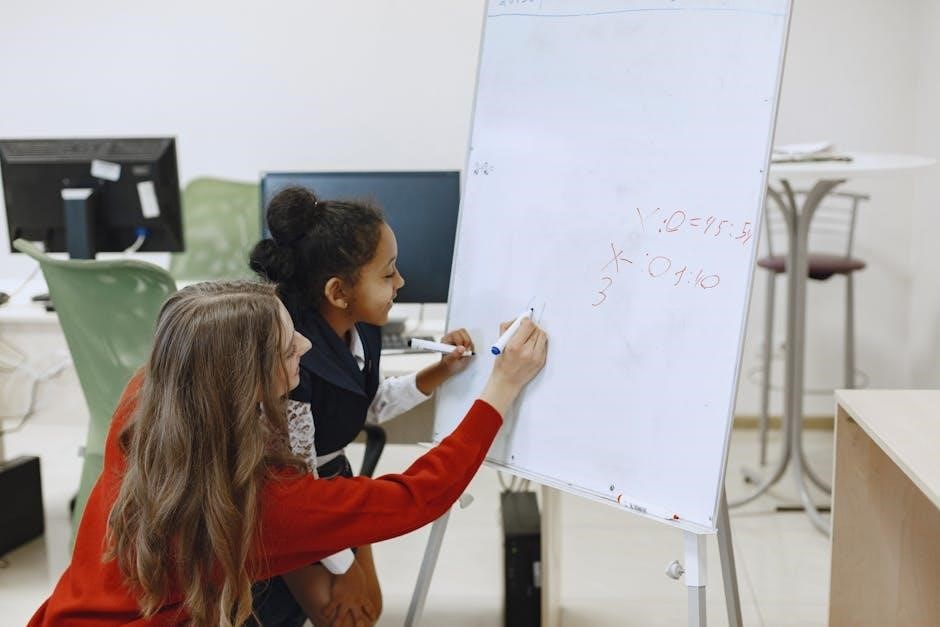
Evaluating the Effectiveness of Instructional Assistance
Evaluating instructional assistance requires monitoring student progress, assessing understanding, and observing the gradual removal of supports, ensuring learners achieve independence.
Reflecting on practices informs future adjustments.
Assessing Student Progress and Understanding
Assessing student progress within a scaffolded learning environment extends beyond traditional methods. Frequent formative assessments – quick checks for understanding – are crucial. These can include observations during collaborative activities, exit tickets summarizing key concepts, or brief quizzes focusing on specific skills.
The goal isn’t solely to assign grades, but to gather data informing instructional adjustments. Are students successfully applying newly learned strategies? Where are the sticking points? Analyzing student work samples reveals patterns of misunderstanding, guiding targeted interventions.
Furthermore, consider student self-assessments. Encouraging learners to reflect on their own progress fosters metacognitive awareness and ownership of their learning. This process helps identify areas where continued support is needed, ultimately leading to greater mastery and independence.
Regular monitoring ensures scaffolding remains effective.
Monitoring the Removal of Scaffolds
Effective instructional assistance isn’t about perpetual support; it’s about strategic fading. Monitoring the removal of scaffolds requires careful observation of student performance as assistance is gradually withdrawn. Begin by reducing the most overt supports – like step-by-step instructions – while closely observing if students can maintain success.
Look for indicators of independent application: can they solve problems with minimal prompting? Are they able to articulate their reasoning? If performance declines, reinstate the scaffold temporarily, then attempt a more gradual reduction.
This process is iterative and individualized. Some students may require longer periods of support than others. The key is to avoid removing scaffolds prematurely, which can lead to frustration and disengagement, or conversely, maintaining them for too long, hindering the development of self-regulation.
Reflecting on Instructional Practices
Consistent reflection is crucial for refining instructional assistance strategies. After implementing scaffolding techniques, educators should critically analyze their effectiveness. Consider: Were the initial scaffolds appropriate for students’ needs? Was the fading process too rapid or too slow? Did all students benefit equally, or were adjustments needed for specific learners?
Analyzing student work, observing classroom interactions, and gathering feedback provide valuable insights. Reflecting on what worked well and what didn’t allows for continuous improvement.
This iterative process ensures that instructional assistance remains responsive to student needs, promoting equitable access to learning. Documenting these reflections can inform future lesson planning and collaborative discussions with colleagues, fostering a culture of continuous professional growth.